Each roaster has its own style: Lavazza's Italian espresso , from Turin since 1895; Kimbo's Neapolitan espresso ; Bristot at the foot of the Dolomites; Covim in Genoa; Delta's Portuguese blends ; and the French brand Carte Noire , plus an organic selection . Choose according to your taste and your machine.
Roaster from Turin since 1895: Crema e Aroma Expert, Super Crema, Gran Espresso, Gold Selection,Aroma Top 100% Arabica and organic Voix de la Terre, in 1 kg bags and in packs up to 30 kg.
Slow roasted Portuguese coffee, in Campo Maior since 1961: the number 1 brand in Portugal. From Delta Gold with honey notes to the Ritual , in 500g and 1kg bags and in packs up to 30kg.
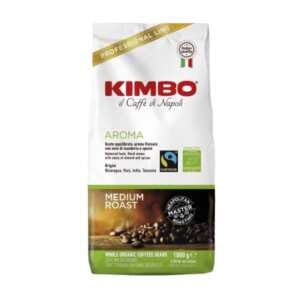
Neapolitan espresso : Kimbo was founded in Naples in 1963 and roasts its beans in Melito di Napoli. Prestige, Extra Cream, Cremoso, Espresso Mix, Armonico and Kimbo Bio, available in 1 kg bags and 3 and 6 kg packs.
Five families of Genoese roasters, serving bars for over fifty years: Granbar, Orocrema, Prestige and Giada, in 1 kg bags.
Belluno roaster, at the foot of the Dolomites, since 1919: Classico Intenso e Cremoso, Classico Oro and Americano Dark Roast, in 1 kg bags.
French brand created in 1978. Two whole bean coffees from its Professional range, in 1 kg bags: Aromatic,100% Arabica, and Balanced,Arabica and Robusta.
Certified organic selection — Kimbo Bio (organic and Fairtrade) and Lavazza Voix de la Terre (Arabica and Robusta, Expert range), in 1 kg bags and in 3 and 6 kg packs.
Three ways to find your coffee beans: the format that matches your consumption, the intensity you like in the cup, or a specific selection such as 100% Arabica, organic or decaffeinated.
From the discovery pack to the professional pack.
From a mild cup to the strongest espresso.
Origin, organic farming or caffeine-free.
Four guidelines for choosing your coffee beans, whatever your machine.
A light retains more acidity and fruity notes; a dark, often chosen for espresso, provides more body and bitterness, with hints of cocoa. A medium roast balances the two.
Ground coffee loses its aroma much faster than whole beans: ground at the time of extraction, by a grinder or a mill, it produces a more aromatic cup. The shorter the contact with water, the finer the grind should be: fine for espresso, medium for filter coffee, coarse for a French press.
Once opened, store the beans in an airtight, opaque container, or in their tightly sealed bag, in a dry place, away from heat and light. Avoid the refrigerator: moisture will condense on the beans. Lavazza recommends consuming them within one month.
Arabica produces a milder, more aromatic cup, while Robusta offers more body, crema, and caffeine. Most of our whole bean coffees blend the two, such as Lavazza Crema e Aroma Expert, Delta Gold, and Kimbo Extra Cream; Lavazza Aroma Top, Delta Gran Crema, and Carte Carte Noire Professionnel Aromatique are 100% Arabica.
Whole bean coffee retains its aromas longer; once ground, coffee loses them much more quickly. With whole beans, you grind the exact amount for your cup at the last minute, and you adjust the grind size according to your brewing method: fine for espresso, coarser for a filter or French press.
It requires a grinder or a mill. If you don't have either, choose pre-ground coffee, ready for use in a filter coffee maker, Italian coffee maker, or espresso machine with a portafilter.
Depending on the mug you like:
Each card provides the coffee's intensity, composition, and notes.
Coffee doesn't grow in Italy: Italian coffee is roasted and blended in Italy, most often for espresso. Our Italian coffee beans come from:
The price depends on the brand, the coffee and the format. In a 1 kg bag, for example: Kimbo Prestige (€19), Lavazza Crema e Aroma Expert (€19.90) or Delta Gold (€24.50).
For large consumption, in the office or in a bar, see the packs, from 3 to 30 kg: Crema e Aroma Expert in a 6 kg pack (€18.10 per kilo, -9% compared to six 1 kg bags bought separately) or in a 30 kg pack (€16.71 per kilo), Delta Gold in a 10 kg pack (€23.53 per kilo).
Divide 1000 g by the amount of ground coffee needed for one cup. For an espresso, the Italian National Espresso Institute recommends 7 g of ground coffee, and Lavazza indicates 7 to 9 g: one kilo therefore yields 110 to 140 espressos . A lungo, a filter coffee, or a French press will require more coffee per cup.
With Lavazza Crema e Aroma Expert, expect to pay per 7g espresso: in 1kg bags (€0.14) or in 6kg packs (€0.13).
Its enemies are air,light ,heat , and humidity.Once the sachet is opened:
Lavazza recommends consuming the beans within one month. With a pack, only open one sachet at a time: the others remain sealed until the best before date printed on the packaging.
A grinder machine grinds the beans itself: adjust the grind size according to the coffee. If you grind separately, the rule is simple: the shorter the contact between the water and the coffee, the finer the grind should be.
An espresso that flows too quickly and comes out acidic requires a finer grind; if it flows drop by drop and comes out bitter, a coarser grind is needed.
Format
Selections
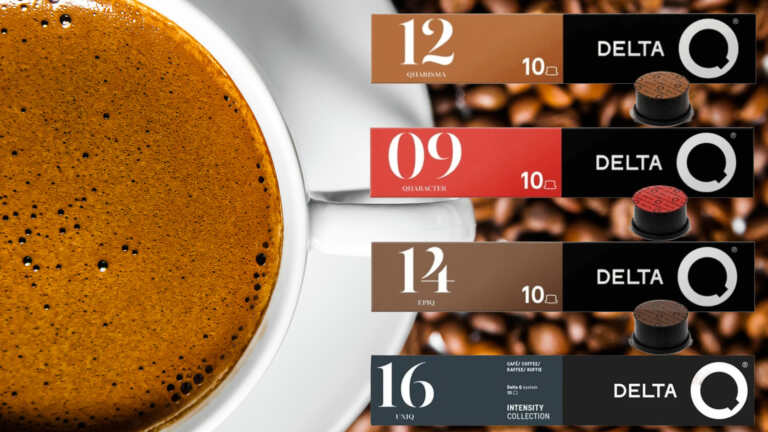 Buying Guide:Which Delta Q capsule should you choose based on your desired intensity? Qharacter 9 / Qharisma 12 / Epiq 14 / UniQ 16.
 Limited-time offer for back to school 2026: Enjoy 10% off everything Cafemalin
 Covim Granbar or Orocrema: Which Lavazza Firma compatible capsule should you choose?
 Lavazza Crema e Aroma Expert vs Crema Classica: which coffee beans to choose?