

![d carousel classic @2[1] — Cafemalin](https://cafemalin.com/wp-content/uploads/2025/01/d-carousel-classic-@21-1.png)


Tasting notes & flavor profile
Intensity
Aromatic notes
Taste Profile
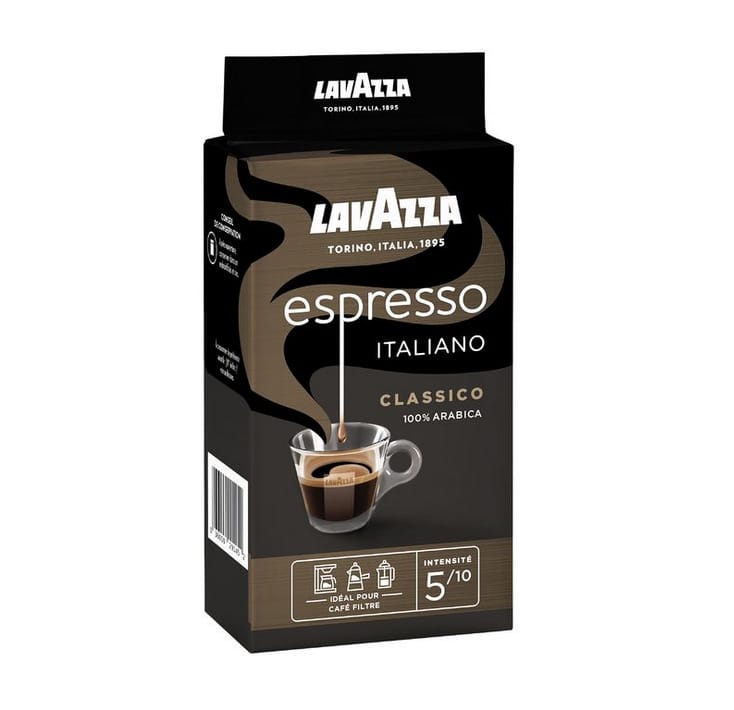
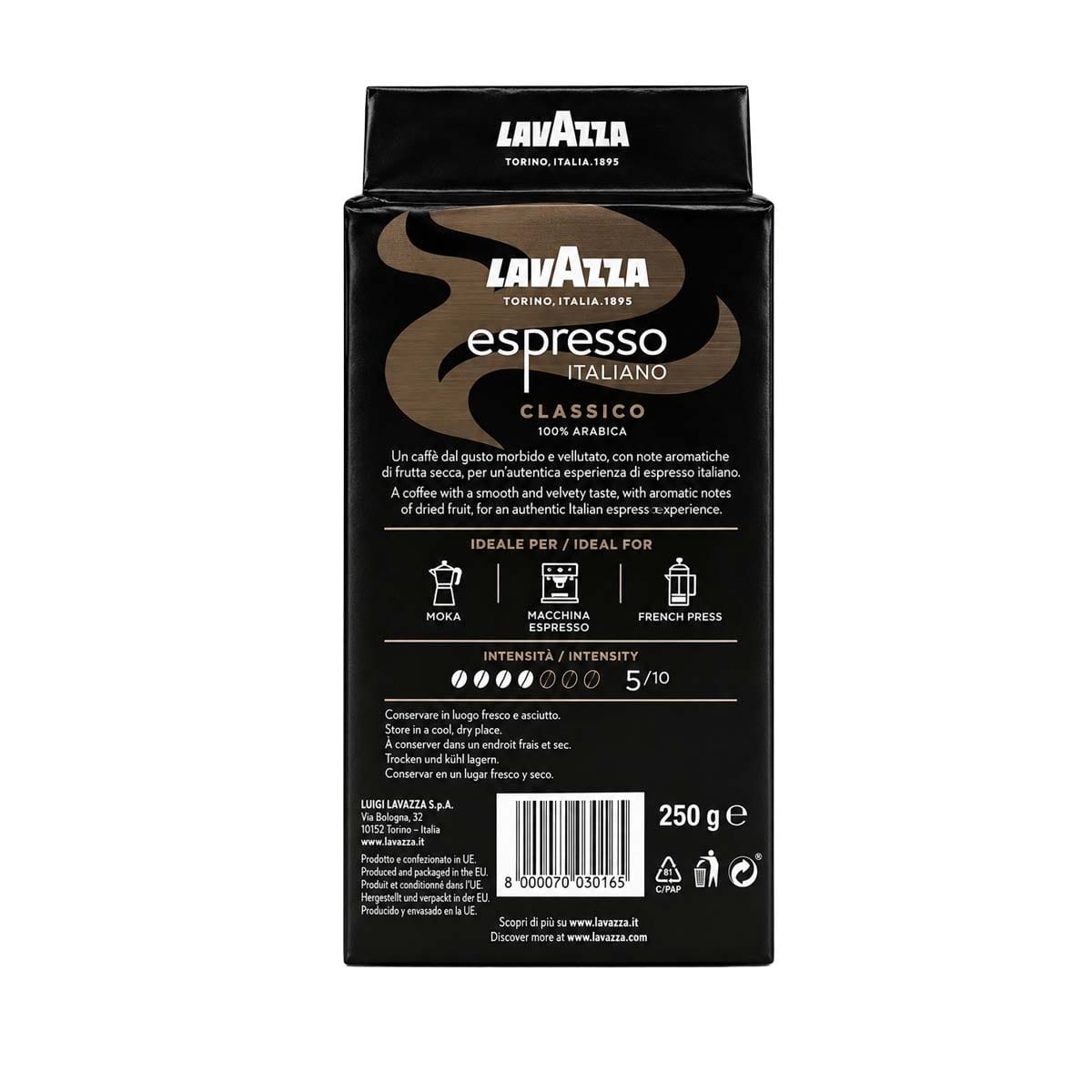
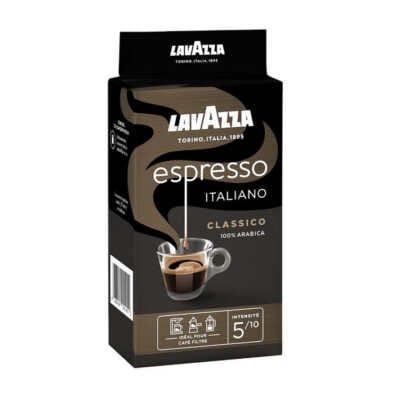
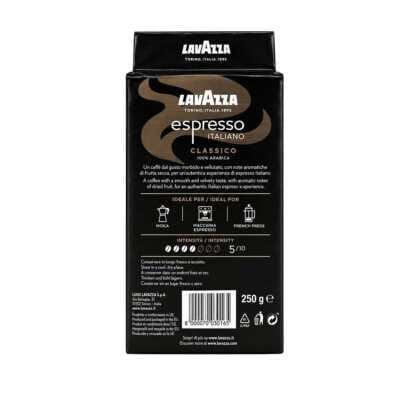
Lavazza Qualità Italiano Classico is the Turin-based brand's signature retail blend, designed to recreate the classic Italian taste at home : an Arabica & Robusta blend from several origins (South America, Africa, Asia), medium roasted in Turin to preserve the balance between a full body and aromatic sweetness . In the cup, it reveals dominant notes of milk chocolate , toasted cereals , and dried fruits (hazelnut, lightly roasted almond), with a measured bitterness and subtle acidity. The finish is smooth and enveloping, typical of the Lavazza Italian home style—a versatile coffee found in millions of Italian homes, prepared in a filter coffee maker , Bialetti moka pot , or French press .
Compatible machines & preparation method
Italian coffee maker (moka pot)
Bialetti/Alessi coffee maker — gentle heat, 3-4 min extraction
- Grind
- Medium-thin (ready-made)
- Dose
- Basket full without packing
- T°
- Gentle warmth
- Time
- 3-4 min
Filter coffee maker
Drip filter machine — ratio 60 g / L, T° 92-96 °C
- Grind
- Medium fine (ready)
- Ratio
- 60 g / L (10 g per 165 mL)
- T°
- 92-96 °C
- Time
- 4-5 min
French Press
Piston infusion, 4 minutes of contact before pressing
- Grind
- Medium (fine acceptable)
- Ratio
- 60 g / L
- T°
- 95 °C
- Time
- 4 min
Homemade espresso
58mm portafilter machine — medium-fine ready grind
- Dose
- 7-9 g (single), 14-18 g (double)
- Compaction
- 15 kg
- Extraction
- 25-30 s
- T°
- 92 °C
Often bought together
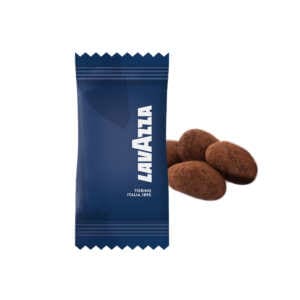
Lavazza Chocolate Almond – 500 chocolates – Individual packaging

Lavazza Speculoos 400 biscuits individual packaging
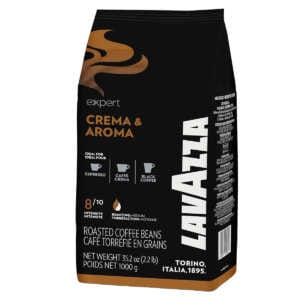
Lavazza Crema & Aroma Expert Whole Bean Coffee – 1 Kg
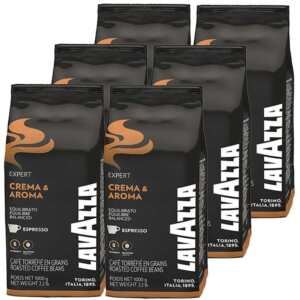
6 kg – Lavazza Crema & Aroma Expert Coffee Beans
Frequently Asked Questions
What is the Qualità Italiano Classico blend?
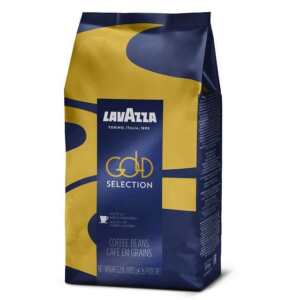
Qualità Italiano Classico is a signature retail , sold in France under the names Italiano Classico or Qualità Classica. It blends Arabica (South and Central America, notably Brazil) and Robusta (Africa and Asia) in a proprietary ratio designed for a balanced medium. The medium roast, carried out in Turin , preserves the aromas of dried fruit and toasted cereals, while also imparting a chocolatey note. It is the most classic Lavazza blend for home use, the one found on Italian supermarket shelves for decades.
What machine or method should I use for this ground coffee?
The grind is medium fine, specifically designed for the following methods:
- Italian coffee maker (moka pot) — the ultimate for Italiano Classico. Result: a full-bodied Italian-style espresso, ~50-100 mL per cup.
- Filter coffee maker (drip) — excellent with a ratio of 60 g / L. Result: long, smooth and well-rounded coffee, ~165 mL per cup.
- French Press — acceptable, contact 4 min. Result: long coffee with a little more substance.
- Portion-style espresso — possible, but the grind is a bit too coarse for a strong espresso. For homemade espresso, a bean-to-cup version with an adjustable grinder is preferable
Not compatible with capsule machines (Nespresso, A Modo Mio, Blue, Delta Q, etc.) — which do not take free ground coffee.
How many cups can be made with a 250g bag?
The yield depends on the method and the dose used:
- Italian coffee maker 3 cups (classic Bialetti moka) — approximately 7-8 basket refills, or ~21-24 moka cups per bag.
- Filter coffee maker (10 g / 165 mL) — ~25 filter cups per 250 g bag.
- Homemade espresso (7-8 g / 30 mL) — ~31-35 espressos per sachet.
- French Press (60 g / L) — ~4 x 1 L pots per sachet.
For home use ( 2 filter coffee makers per day), a 250g bag lasts approximately 2 weeks. For intensive use, consider the 1kg bag of beans or professional packs.
How to store ground coffee to preserve its aromas?
coffee oxidizes more quickly than whole bean coffee because its surface area exposed to air is much larger. Best practices:
- Reseal the bag immediately after each use (Lavazza heat-sealable strip if present).
- Or transfer into an opaque, airtight jar — tinted glass or ceramic with a silicone seal.
- Store at room temperature (18-22 °C), away from light and heat sources (oven, hob, radiator).
- Avoid the refrigerator : humidity + absorption of nearby odors quickly degrades the coffee.
An opened bag should ideally be consumed within 2 to 3 weeks. Beyond that, the aroma loses noticeably (loss of volatile fruity notes, flattening of the body). For the best freshness, opt for whole bean coffee ground to order with a home grinder.
Difference between Italiano Classico, Crema e Aroma and Qualità Rossa?
Three Lavazza signature retail with different balances:
- Italiano Classico (this product) — Medium-bodied Arabica-Robusta, balanced, full-bodied, with notes of chocolate and dried fruit. The classic for filter coffee makers and moka pots.
- Crema e Aroma — Arabica-Robusta, slightly more full-bodied, with more intense chocolate notes anda slightly darker roast. Ideal for homemade moka and espresso. See 1 kg bean version.
- Qualità Rossa — More intense Arabica-Robusta, with notes of dark chocolate and a longer finish. Italian bar standard.
The choice depends on your dominant method: Italiano Classico for filter + mild mocha, Crema e Aroma for mocha + medium homemade espresso, Qualità Rossa for strong espresso.
Can I use this ground coffee for an espresso?
Yes, technically possible, with some reservations:
- The grind is medium-fine, a little too coarse for a pure espresso (ideal: fine to very fine). The result in the cup: slightly rapid extraction, less dense crema, and a slightly lighter body.
- For a more classic espresso, opt for a lever machine with 15 bars of pressure and increase the dose (~9 g).
- For a true Italian-style espresso, choose Lavazza beans , ground finely on demand using a dedicated grinder.
On the other hand, this ground coffee excels in Italian moka pots — the Bialetti gives a very decent homemade espresso with this ready-to-use grind.
Verified product reviews from our customers
Be the first to review this product — your feedback helps us improve.
All published reviews are collected and verified by Verified Reviews, an independent trusted third party certified by AFNOR according to the NF ISO 20488. See the certificate.