
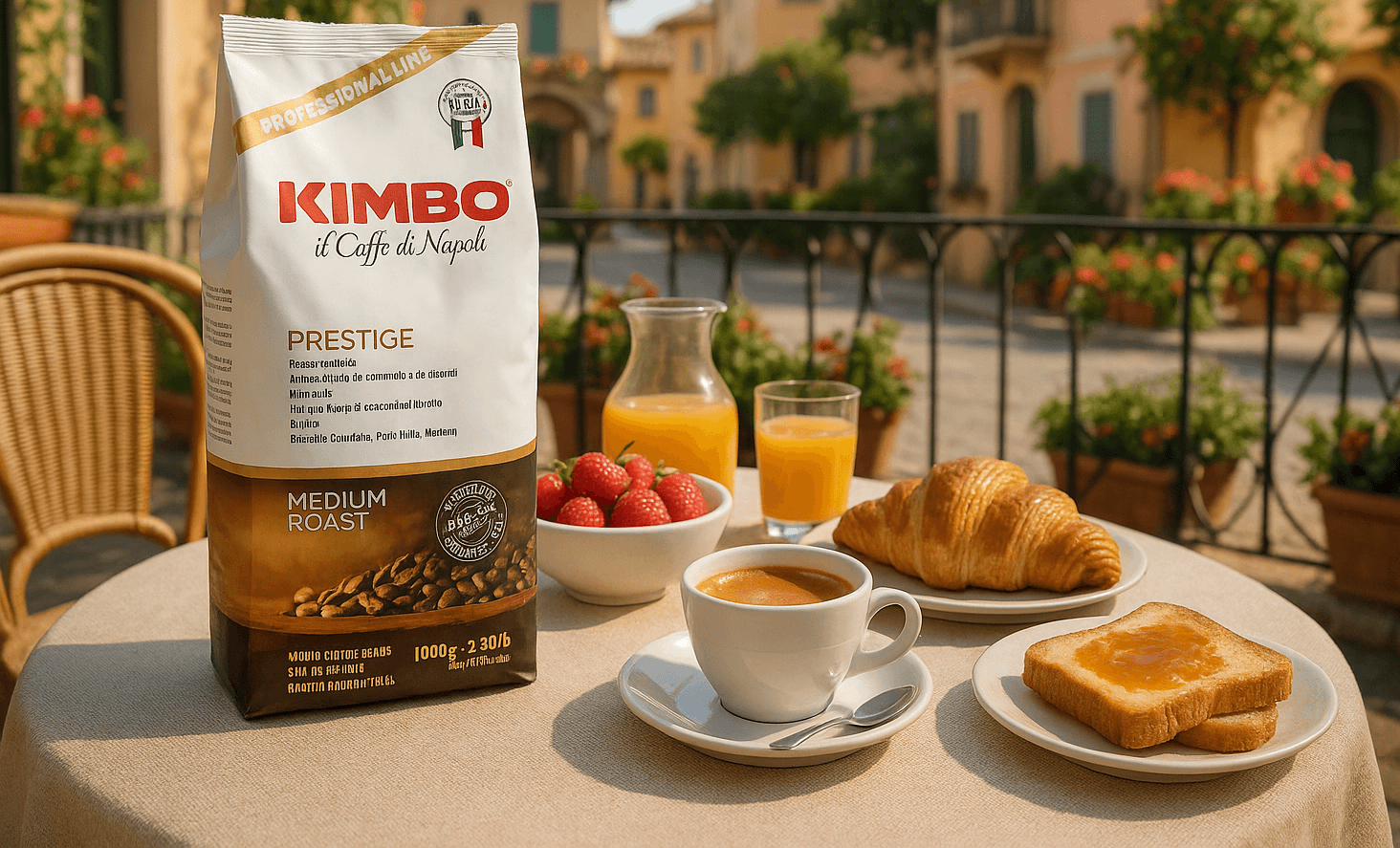
Kimbo Prestige coffee beans are an Italian blend known for its smoothness, generous crema and balanced aromas combining chocolate, caramel, hazelnut and a subtle floral touch. With a medium roast and a composition of mainly Arabica with some Robusta, this blend is perfectly suited to several brewing methods. To realise its full potential, you need to follow a few basic principles, understand how to adapt it to different methods and learn to adjust the settings to suit your preferences. This article explains step by step how to make excellent coffee with Kimbo Prestige, whatever method you use.
1. Understanding Kimbo Prestige coffee beans
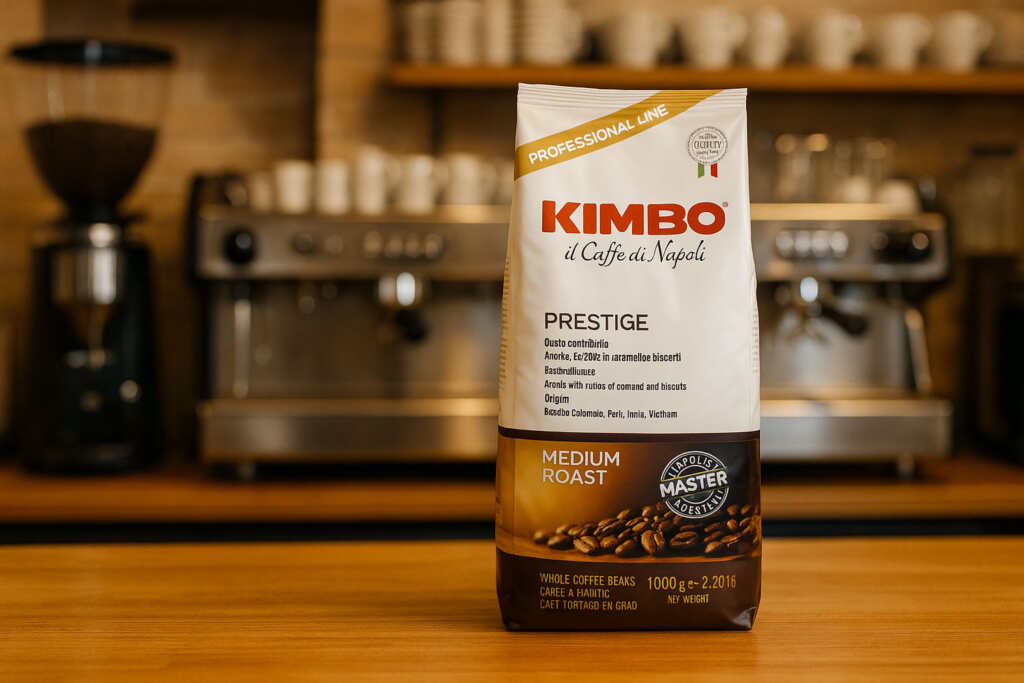
Kimbo Prestige stands out for its mild, balanced flavour profile. Its medium roast makes it suitable for espresso, moka pots, gentle brewing methods and automatic coffee machines. The beans produce a dense, velvety crema when brewed under pressure, while retaining enough subtlety to be enjoyed with gentler brewing methods. Understanding this profile is important, as it will influence the grind, dose and extraction time settings you use.
2. Essential rules before you start brewing
Storing your coffee
Good coffee starts with proper storage. Once you have opened the bag, it is best to transfer the beans to an airtight, opaque container kept at room temperature. Exposure to light, air or heat accelerates oxidation and degrades the aromas. Contrary to popular belief, keeping an opened bag in the fridge or freezer is not recommended, as temperature changes can cause condensation that damages the beans.
The importance of freshly ground coffee
Good coffee always starts with a fresh grind. Kimbo Prestige should be ground just before brewing to preserve all its aromatic notes. The grind setting will depend on the method: fine for espresso, slightly coarser for a moka pot, medium for filter coffee and coarse for a French press. A grind that is too fine will cause bitterness and overly slow extraction, while a grind that is too coarse will produce flat, under-extracted coffee.
3. Making coffee with an automatic espresso machine

Initial machine settings
An automatic machine makes the process much simpler, but setting it up correctly remains crucial. Start with a grind setting in the middle of the range, then adjust it after a few attempts. If the coffee flows too slowly and the espresso seems too concentrated, make the grind slightly coarser. Conversely, if extraction is too fast and produces pale coffee, make the grind finer.
The coffee dose is usually controlled automatically, but you can aim for around seven to nine grams for a single espresso. The volume in the cup should ideally be around twenty-five to thirty millilitres for a standard espresso. The water temperature often cannot be adjusted on automatic machines, but they generally operate between ninety and ninety-four degrees, a range suited to Kimbo Prestige.
Perfect extraction in practice
For ideal extraction, start by switching on the machine and letting it heat up fully. It is then helpful to run a brewing cycle without coffee to warm the internal pipes and your cup. Once the machine is ready, start an espresso and watch the flow. Ideally, it should be a steady stream, neither too fast nor too slow. The crema should be thick and hazelnut-coloured. If the coffee tastes too bitter, try a slightly coarser grind. If it seems too weak or bland, make the grind a little finer or reduce the water volume.
Making milk-based drinks
The profile of Kimbo Prestige is particularly well suited to milk-based drinks such as cappuccino or latte macchiato. After making an espresso of twenty-five to thirty millilitres, froth the milk until it has a creamy, velvety texture. Pour the milk gently over the coffee to create a harmonious drink, supported by the blend’s chocolate and caramel notes.
4. Making coffee with a manual espresso machine
Basic parameters
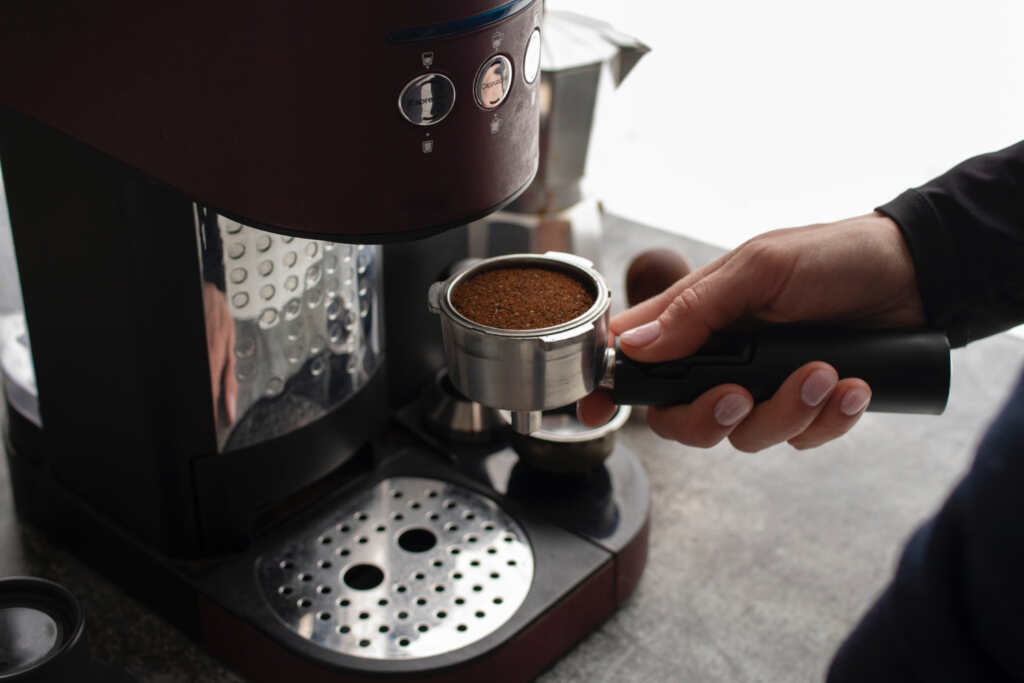
A manual machine lets you take extraction even further and produce an espresso worthy of an Italian coffee bar. A good starting point is to use eighteen grams of ground coffee to produce around thirty-six grams of liquid coffee, giving a ratio of one to two. Extraction should take between twenty-five and thirty seconds, using a fine grind specifically suited to espresso.
Extraction steps
Start by grinding Kimbo Prestige just before brewing. Check that the grind is even and free of clumps. Next, fill the portafilter and level the grounds before tamping firmly. Insert the portafilter and start the extraction, timing it as you go. Correct extraction will produce a dense coffee with a thick crema and pronounced aromas. If extraction is too fast, make the grind finer. If it is too slow, make it slightly coarser.
5. Making coffee with a moka pot
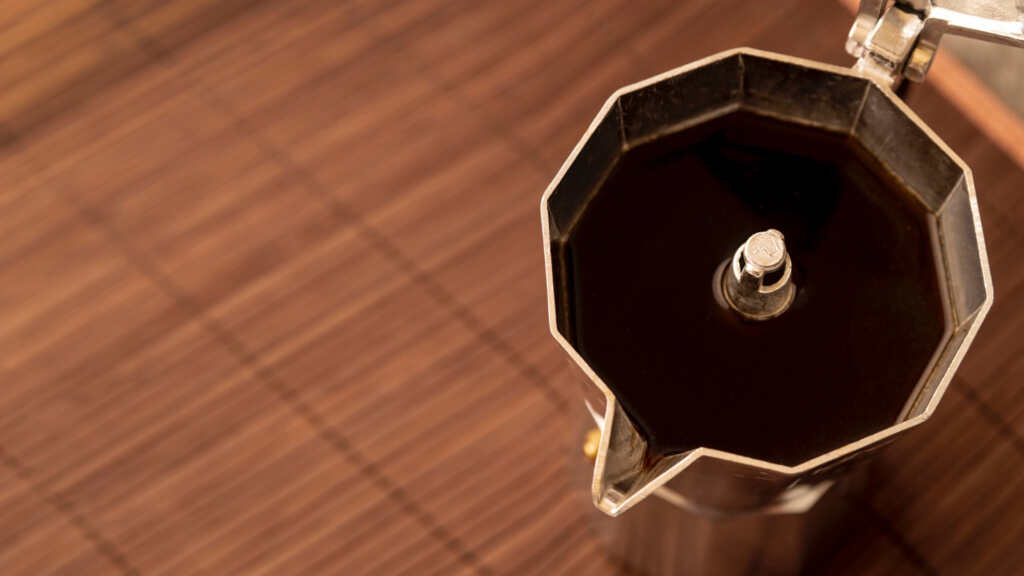
Choosing the right grind
A moka pot is ideal for producing an intense, aromatic coffee. Use an intermediate grind, finer than for filter coffee but slightly coarser than for espresso. The grounds should have a texture somewhere between fine salt and caster sugar.
The full procedure
Start by filling the lower chamber of the moka pot with hot water up to the valve. Using hot water reduces the time spent on the hob, limiting the risk of burning the coffee. Next, fill the filter basket with ground coffee without tamping it, simply levelling the surface. Assemble the moka pot and place it over a low or medium heat.
Extraction will begin as the coffee starts to rise into the upper chamber. As soon as the flow becomes pale and uneven, remove the moka pot from the heat to avoid over-extraction. Some people even run the lower chamber under cold water to stop the heating immediately. The result is a fragrant, dense coffee, perfect for those who enjoy the intensity of Italian coffee.
6. Making filter coffee (V60, Chemex, filter coffee machine)
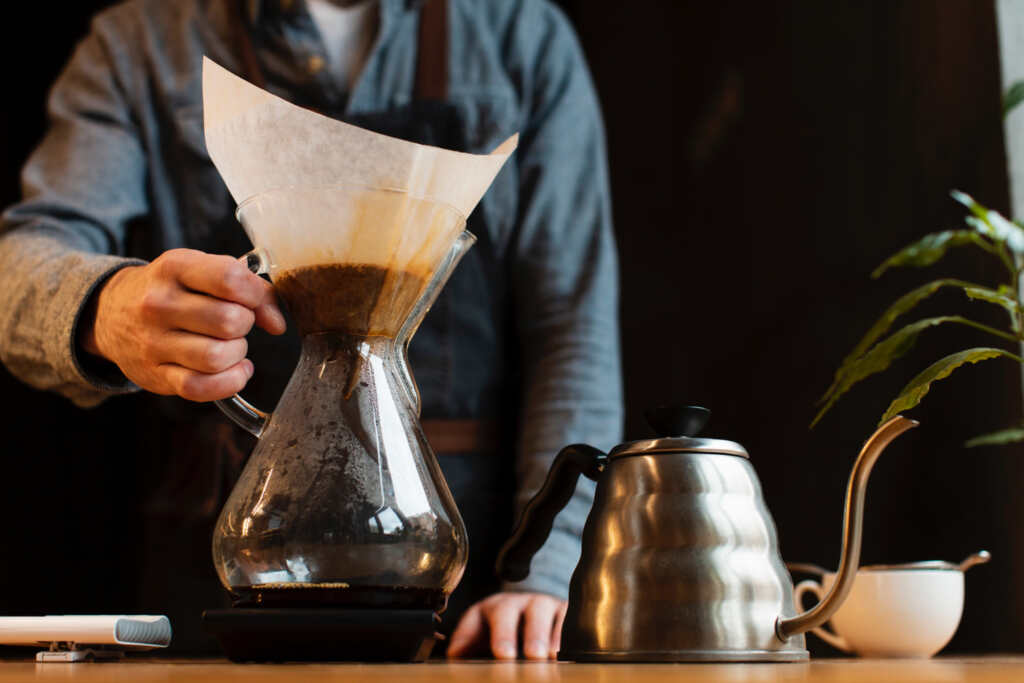
The Chemex is an hourglass-shaped glass coffee maker, invented during the decade beginning in 1940. It uses thick paper filters, denser than those used in a standard filter coffee maker
The V60 is a filter cone made by Hario (a Japanese brand). Its name comes from the angle of the cone: 60°. It is available in plastic, ceramic, glass or metal.
Ratios and grind
Although Kimbo Prestige is designed for espresso, it can make excellent filter coffee. The standard ratio is sixty grams of coffee per litre of water, equivalent to fifteen grams per two hundred and fifty millilitres. Use a medium grind for balanced extraction. A grind that is too fine will slow the flow and cause bitterness, while a grind that is too coarse will produce coffee that is too pale.
Brewing steps
If you are using a V60 or Chemex, start by rinsing the paper filter with hot water to remove any paper taste and preheat the carafe. Next, add the grounds and pour in a small amount of water, roughly twice the weight of the coffee, for pre-infusion. This stage, known as the bloom, lasts around thirty seconds and allows the coffee to release gas for more even extraction.
Then pour in the remaining water in several circular motions, keeping the water level constant. The total brewing time should be around two minutes thirty seconds to three minutes thirty seconds for a two hundred and fifty millilitre cup. The result is a mild, rounded cup, ideal for the morning, revealing subtle notes of chocolate and caramel.
7. Making coffee with a French press
The right preparation
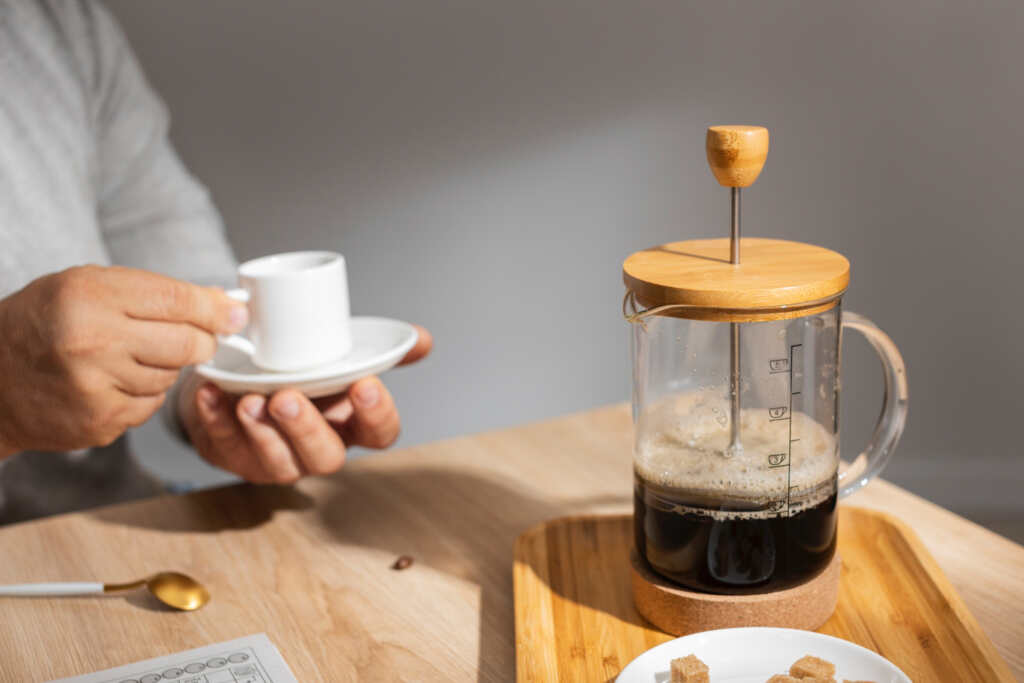
A French press produces a rich, textured cup. For this method, use a coarse grind, similar to coarse salt. If the grind is too fine, the coffee will become muddy and bitter. Preheat the French press with a little hot water, then add the ground coffee and pour in water at between ninety-two and ninety-four degrees.
Brewing steps
After pouring in the water, stir gently to wet the grounds thoroughly. Put the lid on without pressing the plunger and leave to brew for four minutes. Once the time is up, lower the plunger slowly to avoid disturbing the coffee bed. For the best possible cup, serve the coffee immediately or transfer it to a carafe, as leaving it in the French press would allow extraction to continue, causing bitterness.
8. How to adjust Kimbo Prestige coffee to suit your taste
For a full-bodied coffee
If you enjoy intense coffees, you can opt for shorter extractions, finer grinds and smaller drink volumes. The ideal methods are a manual espresso machine, an automatic espresso machine on the ristretto setting, or a moka pot. The coffee will gain strength, texture and aromatic depth.
For a mild coffee
If you prefer a lighter coffee, gentler brewing methods such as filter or French press are a better choice, with a coarser grind and a higher ratio of water to coffee. These methods bring out more of the smoothness of Kimbo Prestige and soften its character.
For milk-based drinks
Kimbo Prestige pairs particularly well with milk. Its chocolate and caramel notes become more pronounced when mixed with hot milk or fine milk foam. Whether you make a cappuccino, a latte or a latte macchiato, the blend retains all its indulgent flavour.
9. In summary
Making excellent coffee with Kimbo Prestige relies on a good understanding of its characteristics, a grind suited to each brewing method and careful attention to essential parameters such as extraction time, water temperature and ratios. Each method offers a different experience: espresso reveals its full intensity, a moka pot produces a full-bodied coffee, filter brewing brings out its mildness, and a French press highlights its aromatic richness. By adjusting the grind and drink volumes to your taste, you can achieve a cup perfectly suited to your preferences.