
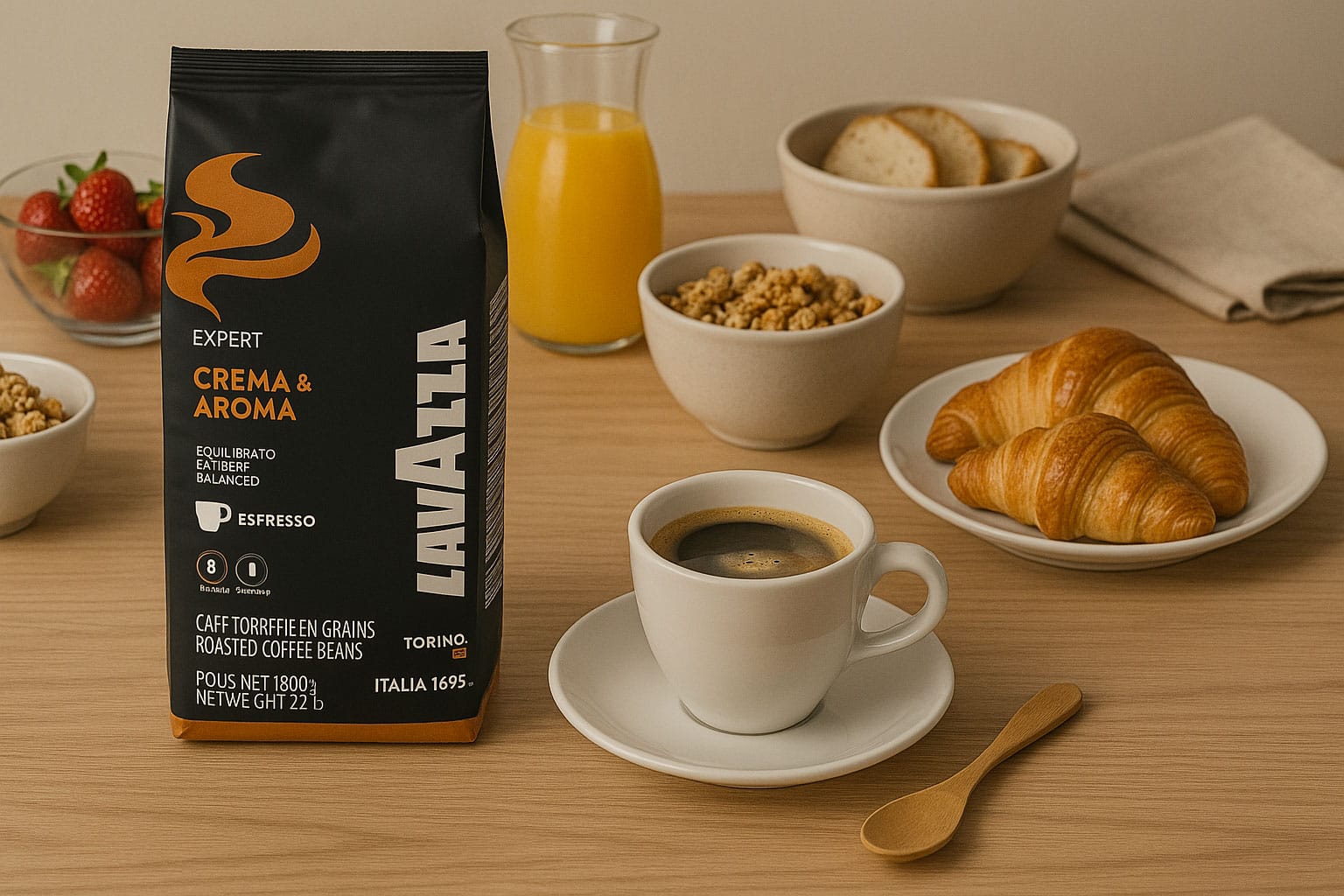
Preparing good coffee with Lavazza Expert whole beans coffee is mainly a matter of method: choosing the right grind, mastering the water temperature, respecting the right ratios, and adapting the technique to each type of preparation. The Lavazza Expert range is designed to offer an intense, aromatic, and creamy coffee, ideal for espresso but also very convincing in moka, piston coffee maker, or filter. Here, step by step, is how to get the most out of these beans using different methods.
Understanding Lavazza Expert whole beans coffee

A coffee designed for intensity and versatility
Coffee beans Lavazza Expert are designed originally for professionals and automatic machines. They are blends of Arabica and Robusta, with a generally medium to dark roast. This gives a coffee with a generous body, with a beautiful crema in espresso and marked aromas, often around chocolate, dried fruits, honey or spices, depending on the chosen reference. In practice, this means that these beans work particularly well for intense preparations, such as espresso and ristretto, while still being suitable for milder methods like filter or French press, provided the grind and dose are adjusted. These coffees are quite tolerant: a few simple adjustments allow you to obtain either a more powerful result, or a sweeter and rounder cup.
The essentials before getting started
Properly storing Lavazza Expert coffee beans
Before discussing the methods, we need to establish the basics. First, storage: a pack of Lavazza Expert should be kept tightly sealed, away from light, heat, and humidity. If possible, transfer the beans to an opaque airtight container. The idea is to limit oxidation and loss of aromas. There's no need to store the beans in the fridge or freezer, as this mainly creates condensation and temperature fluctuations that damage the coffee.
Choosing the right grind at the right time
Then, the grind. Ideally, we grind the beans just before preparing the coffee, with a burr grinder rather than a blade grinder, to obtain a regular grind. The shorter and more intense the method (like espresso), the finer the grind should be. Conversely, for a long infusion like a French press, the grind should be coarse. Espresso requires a very fine grind, close to fine salt. The Italian Moka requires a slightly coarser grind. The filter needs a medium grind, comparable to powdered sugar. The French press, on the other hand, requires a coarse grind, close to sea salt.
The importance of water and the right ratios
Water also plays a crucial role. It represents more than half of what you drink, sometimes much more. Use filtered or lightly mineralized water, as water that is too hard or heavily chlorinated can harden the taste and mask the aromas of the coffee. For temperature, the ideal is between 90 and 96 °C. If you use a kettle, simply let the water rest for about thirty seconds after boiling before pouring. Finally, keep some dose benchmarks in mind: for an espresso, generally count between 8 and 10 g of coffee for a small volume around 25 ml. For filtered coffee, a classic ratio is about 6 g of coffee for 100 ml of water. In a piston coffee maker, you can go up to 8 or 10 g for 100 ml if you like strong coffee.
Preparing an espresso with a manual machine
Preheat the machine and cups
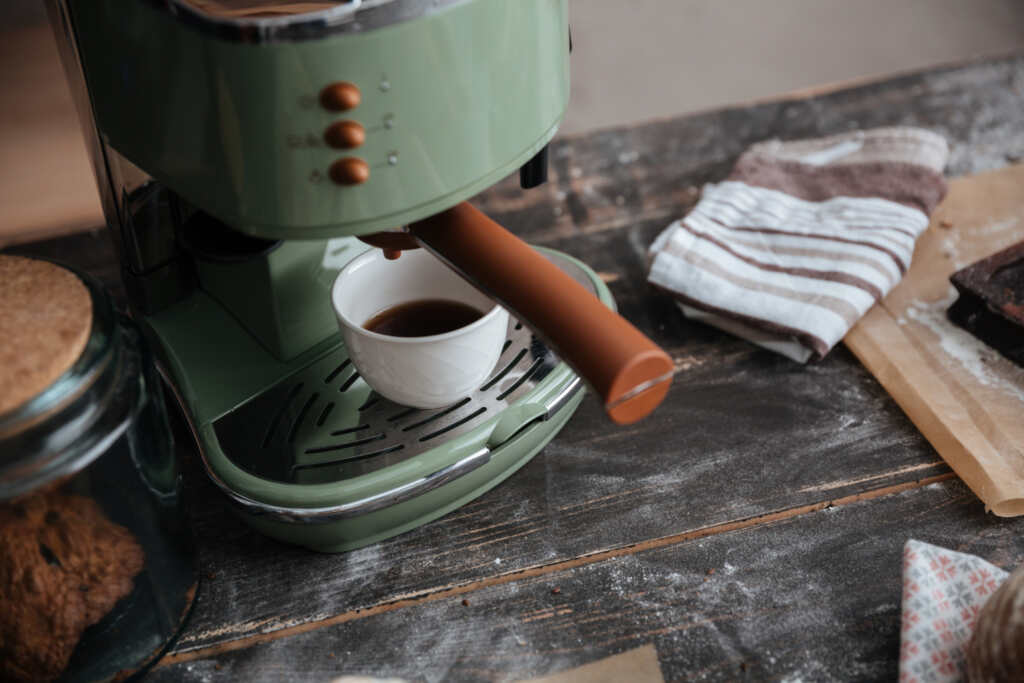
Espresso is undoubtedly the method that brings out the most value in Lavazza Expert beans. Start by turning on your machine and let it heat up for fifteen to twenty minutes. The group, portafilter, and cups must be hot to ensure stable extraction. Place the cups on the cup warmer if you have one, and check that the portafilter is dry and at temperature.
Coffee dosage, grinding, and tamping
Grind the beans to a very fine grind. Dose about 8 to 10 g for a simple espresso and 16 to 18 g for a double, depending on the size of your filter. Pour the grind into the portafilter and distribute it evenly. With a tamper, tamp firmly but without excessive force: the goal is to obtain a homogeneous, flat puck, without cracks or holes. Wipe the edges of the portafilter to remove coffee residues.
Master the extraction time
Insert the portafilter into the group, start the extraction immediately and observe the coffee flow. For a correct espresso, aim for a flow time of 25 to 30 seconds for about 25 to 35 ml of coffee. The stream should be fine, regular, and the color hazelnut. On the surface, a beautiful amber crema should form, typical of blends containing Robusta.
Adjust the grind according to the result
If the coffee is very bitter, very tight, with little volume and a slow flow, the grind is probably too fine or the coffee dose too large. In this case, slightly coarsen the grind. Conversely, if the coffee is very clear, acidic and watery, with a rapid flow, the grind is too coarse and will need to be refined. In a few trials, you will find the ideal grind setting for your Lavazza Expert and your machine.
Use an automatic machine with built-in grinder
Prepare the machine and choose the mode
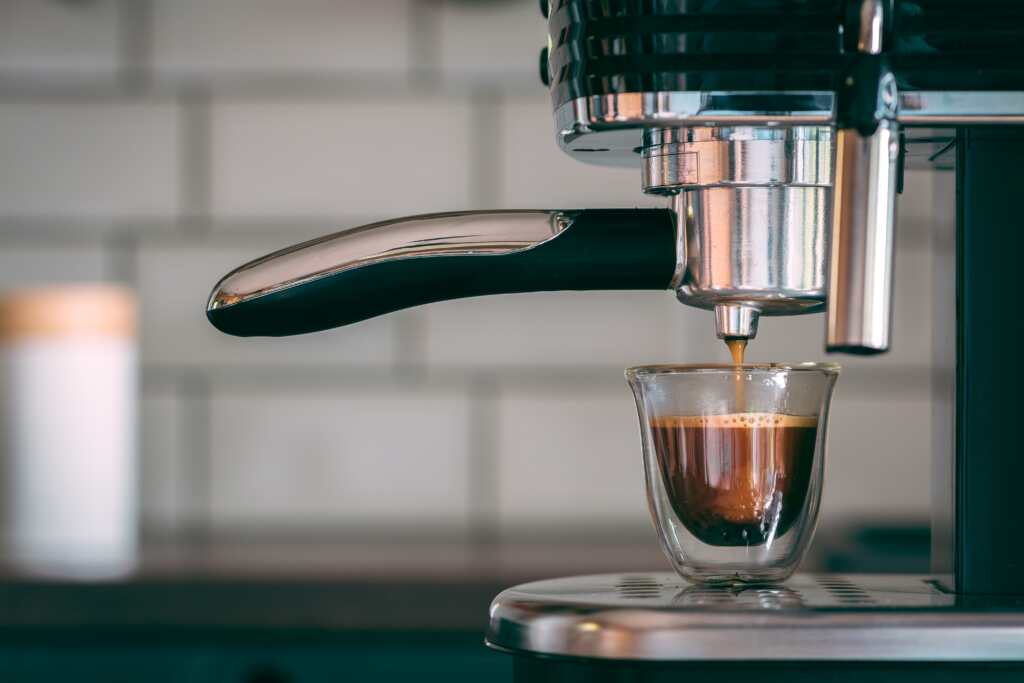
Automatic machines with grinders are almost the natural playground of the Lavazza Expert range. First, fill the grain compartment with your Lavazza Expert beans and the water tank with filtered water. Then turn on the machine and choose the espresso or long coffee mode, depending on what you want.
Adjust the grind on the machine
The first step is to adjust the grind on the machine. Prepare a first espresso with the basic setting. Taste it, then adjust. If the coffee is too bitter, very tight or heavy, increase the grind size by one notch towards coarser. If, on the other hand, it is clear, watery, without crema and with little body, go down towards finer. Change only one notch at a time and make two or three coffees to confirm your impression, as some machines take a little time to apply the new setting.
Manage intensity to adapt the cup
Then, play on the machine's intensity setting, which often corresponds to the amount of ground coffee per cup. If you like strong and powerful coffees, increase the intensity. For milder coffees or larger cups, reduce it slightly. When you want a long coffee, it is often better to first prepare a well-extracted espresso, then lengthen it with hot water rather than letting the machine extract for a very long time with the same coffee puck, which can result in an over-extracted and bitter drink.
Prepare a coffee in Italian Moka
Fill the base and choose the grind
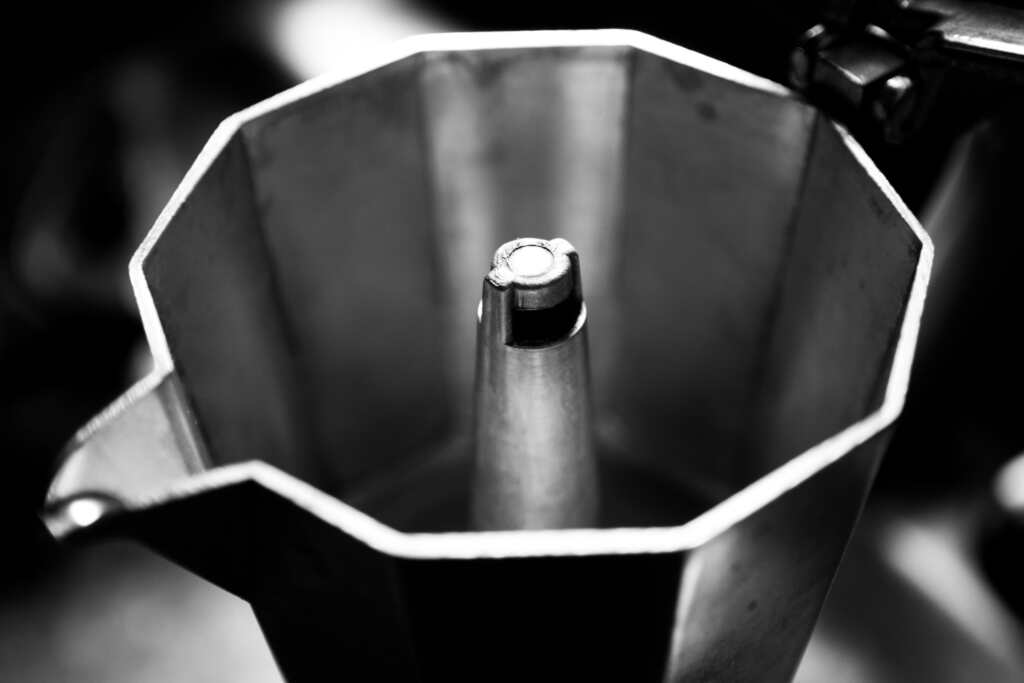
The Italian coffee maker, or Moka, allows you to obtain a coffee close to espresso but without an expensive machine. First, fill the base of the coffee maker with water, up to the level of the small safety valve, without exceeding it. Then use a fine grind, a bit coarser than that used for espresso. Fill the filter with ground Lavazza Expert coffee to the brim, without packing it down strongly. Simply flatten the top with your finger to remove the excess.
Soft cooking and monitoring of extraction
Tighten the coffee maker well and place it on low to medium heat. Leave the lid slightly ajar to monitor the rising coffee. The coffee will start to flow into the top part, producing a slight gurgling sound. As soon as the flow becomes clearer and louder, remove the coffee maker from the heat to avoid burning the last milliliters. A useful trick is to stir the coffee in the top part lightly with a spoon before serving, to homogenize the extraction and have a more consistent cup.
Using a piston coffee maker (French press)
Prepare the grind and ratio
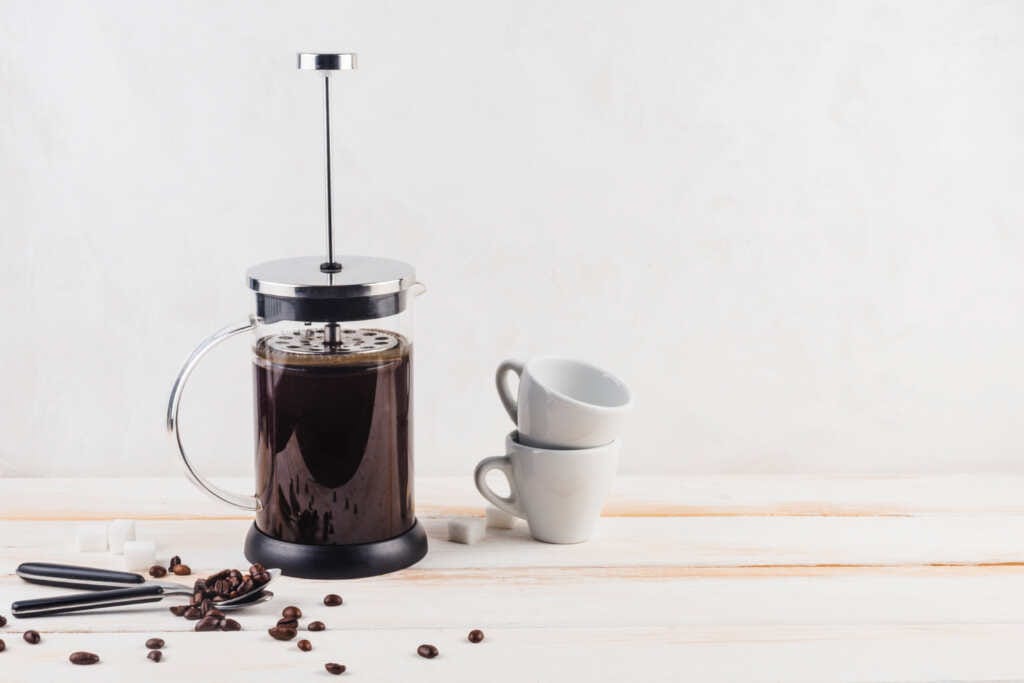
The piston coffee maker is perfect for obtaining a round and bold coffee. With Lavazza Expert, it highlights the notes of chocolate, hazelnut, and spices. Start by grinding the beans to a coarse grind. Pour the grind into the bottom of the coffee maker, respecting a starting ratio of about 8 to 10 g for 100 ml of water. Heat the water to around 90–95 °C.
Bloom and coffee infusion
Pour just enough water to wet the coffee and cover the entire grind. Let it rest for about thirty seconds. This phase, called bloom, allows the coffee to degas the CO₂ accumulated during roasting and provides a more regular extraction. Then, pour the rest of the water, stir gently with a non-metallic spoon to mix the grind and water, then place the lid without pressing on the piston. Let it infuse for about four minutes. If you like an even bolder coffee, you can leave it a little longer, but beyond that, the risk of bitterness increases.
Press and serve without delay
At the end of the infusion time, lower the piston slowly and smoothly. Serve the coffee in a cup immediately. Avoid leaving the infused coffee at the bottom of the coffee maker, as it would continue to extract and become bitter. If you have prepared a large quantity, pour the surplus into another thermal container to preserve the flavor.
Preparing a filter coffee (V60, Chemex, or electric coffee maker)
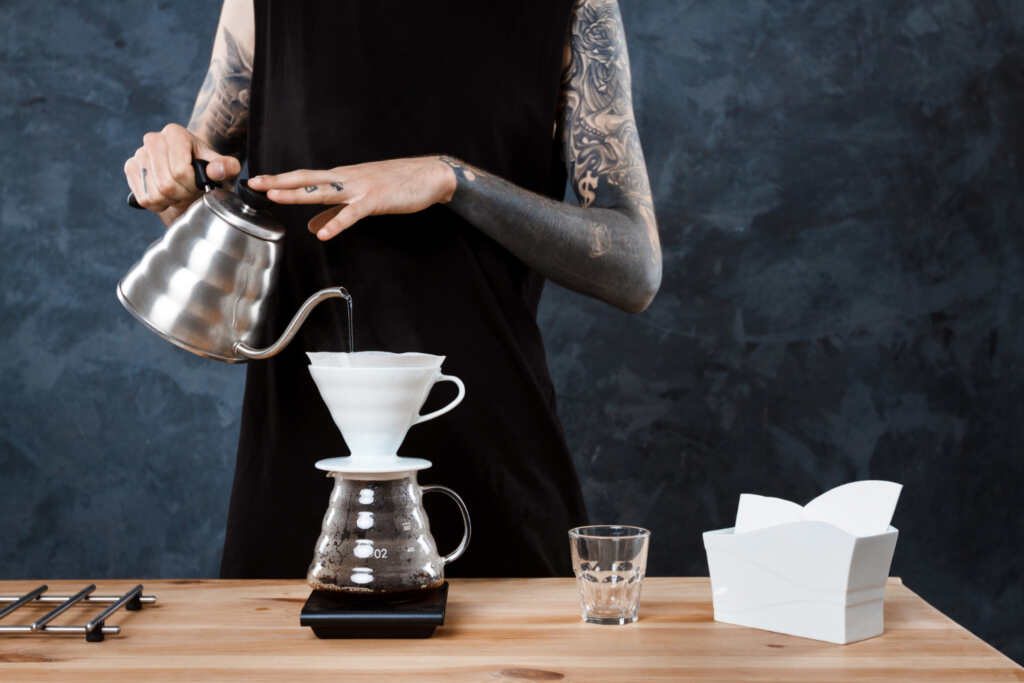
The Chemex is a glass coffee maker in hourglass shape, invented in the 1940s. It uses paper thick, denser than those of a classic drip coffee maker
The V60 is a filtering cone made by Hario (Japanese brand). Its name comes from the angle of the cone: 60°. It is available in plastic, ceramic, glass or metal.
Define the grind and proportions
With Lavazza Expert, filtered coffee gives a rather full-bodied and aromatic result, perfect if you like characterful coffee even with a gentle method. Grind the beans to a medium grind first. For quantities, a simple ratio is 6 g of coffee for 100 ml of water. For example, for 500 ml of water, use about 30 g of coffee.
Prepare the filter and grind
Place the paper filter in your filter holder or Chemex and rinse it with hot water. This rinse removes the paper taste and preheats the carafe. Discard the rinse water, then add the coffee grounds to the filter. Pour a small amount of water, about twice the weight of the coffee. If you have 30 g of coffee, start with 60 g of water. Let the coffee 'bloom' for 30 to 45 seconds. You will see bubbles forming, a sign that the coffee is degassing.
Control the flow rate and flow time
Then, pour the rest of the water several times, making regular circular movements from the center to the outside, without sticking to the filter. Two or three pours are enough to maintain good control. The total flow time should be between two minutes thirty and four minutes depending on the method. If the water passes too quickly and the coffee is weak, the grind is too coarse and will need to be fine-tuned. If, on the other hand, the flow is very slow and the coffee is too bitter, the grind is too fine and will need to be coarsened.
Make cappuccinos and lattes with Lavazza Expert coffee
Prepare an espresso as a base
Once you have mastered a good espresso with your Lavazza Expert beans, you can easily prepare milk-based drinks like cappuccino or latte. Always start with a well-adjusted espresso, neither too long nor too acidic. A cup of 25 to 30 ml is a good starting point.
Work the milk with the steam wand or frother
If you have a steam wand, fill a small jug with cold milk, preferably whole or semi-skimmed for a creamier foam. Dip the wand just below the surface of the milk and introduce a little air at the beginning, until you reach a lukewarm temperature, around 35-40 °C. Then, lower the jug to heat the milk without adding too much air. Stop heating around 60-65 °C to keep the milk smooth and sweet. Without a steam wand, you can heat the milk in a saucepan or in the microwave, then froth it with a manual or electric frother.
Measuring cappuccino and latte
For a cappuccino, pour the espresso into the cup first, then add about the same amount of hot milk and finish with an equivalent layer of milk foam. For a latte, the espresso takes up a smaller portion of the cup, topped with plenty of hot milk and a thin layer of foam. The flavor profiles of Lavazza Expert coffees, often chocolate and hazelnut, pair particularly well with milk and make these drinks rich even without sugar or syrup.
Correcting the most common problems
Reducing bitterness and astringency
It is normal to have to adjust a few parameters at the beginning. If your coffee is very bitter, astringent, with a dry taste in the mouth, it is likely that the grind is too fine or that the extraction time is too long. In this case, coarsen the grind a bit, possibly reducing the dose or water volume.
Add more body to a too flat coffee
On the contrary, if your coffee is flat, watery, without crema in espresso, with little body, the grind is probably too coarse or the dose insufficient, or even the water temperature too low. You can then refine the grind slightly and increase the coffee a bit.
Avoid burnt or 'weird' taste
A burnt taste often comes from overheating, for example, a fire that is too strong under the moka or an espresso machine that has not been purged before extraction. Consider running a short flush of clear water through the espresso machine before preparing your cup, and lowering the heat on the Italian coffee maker. A 'weird' or 'earthy' taste can come from the water (too chlorinated) or a lack of cleaning. In this case, switch to filtered water and perform a good descaling as well as cleaning of coffee oil residues present in the group, bin, and grinder.
In summary
Get the most out of Lavazza Expert coffee beans
With Lavazza Expert whole bean coffee, you have a very versatile base for preparing a dense and creamy espresso, a fragrant moka, a bold filter or a round and generous piston coffee, not to mention cappuccinos and lattes. The key lies in three areas: adapting the grind to the method used, maintaining a consistent coffee-to-water ratio, and adjusting the grind-dose-extraction time trio until you find the right balance. Once these parameters are mastered, every cup prepared with Lavazza Expert will fully reveal the aromatic potential of these beans.