
The origins of KIMBO: Naples, cradle of Italian coffee
The KIMBO brand finds its roots in the Neapolitan coffee tradition, renowned worldwide for its intensity, aroma, and ritual. Founded in the 1960s in Naples, the company was born out of the passion of the Rubino brothers, who ran a local pastry shop. Their expertise in artisanal coffee roasting, initially intended for personal use and for their local clientele, quickly sparked such enthusiasm that they decided to launch on a larger scale.
Their coffee, roasted with care and characterized by a dark roast typically Neapolitan, stood out for its bold flavor, thick foam, and aromatic power. From then on, the idea of marketing this coffee took shape, laying the foundations for an ambitious industrial adventure.
The birth of the KIMBO brand
It was in 1963 that the Rubino brothers officially founded Cafè do Brasil SpA, the company that would produce KIMBO coffee. The brand name was chosen to evoke both the exoticism of Brazil, one of the world's largest coffee producers, and a short sound, easy to remember and pronounce, even internationally.
The success of Neapolitan coffee KIMBO is almost immediate in southern Italy, particularly thanks to the consistent quality of its products, the use of rigorously selected beans, and a roasting technique that respects traditions while adapting them to industrial requirements.
National expansion in the 1970s and 1980s
During the 1970s, KIMBO embarked on a strategy to conquer the Italian market. The company established a modern production site in Melito di Napoli, capable of meeting the growing demand. The arrival of television in Italian homes allowed KIMBO to make itself known through striking advertising campaigns, which associated the brand with values of conviviality, tradition, and quality.
In the 1980s, KIMBO became one of the main players in the Italian coffee industry, particularly in the ground and whole bean coffee sector for households, but also through bars and professional cafes, pillars of Italian culture.
KIMBO and the internationalization of the brand
With its dominant position in southern Italy, KIMBO then began to expand internationally. In the 1990s and 2000s, the brand began exporting to Europe, the United States, Canada, Australia, and the Middle East. It then relied on a double lever: on the one hand, the growing interest of foreign consumers in the Italian lifestyle (the “dolce vita”), and on the other hand, the prestige of Italian espresso coffee.
KIMBO develops specific ranges adapted to the tastes of certain markets, while maintaining its strong Neapolitan identity. The company also invests in training baristas internationally, to promote Italian coffee culture.
Innovations and diversification of the offer
KIMBO has been able to adapt to changes in the coffee market, particularly with the rise of pods and capsules in the 2000s. The brand then launched its own systems compatible with Nespresso®, Dolce Gusto® or ESE machines, while maintaining its traditional ranges of coffee beans, ground and soluble.
Innovation is not limited to products: KIMBO invests in roasting and packaging technologies to guarantee freshness and consistency of flavors. It also focuses on sustainable development, selecting coffees from responsible supply chains and committing to more environmentally friendly production practices.
The role of marketing in brand image
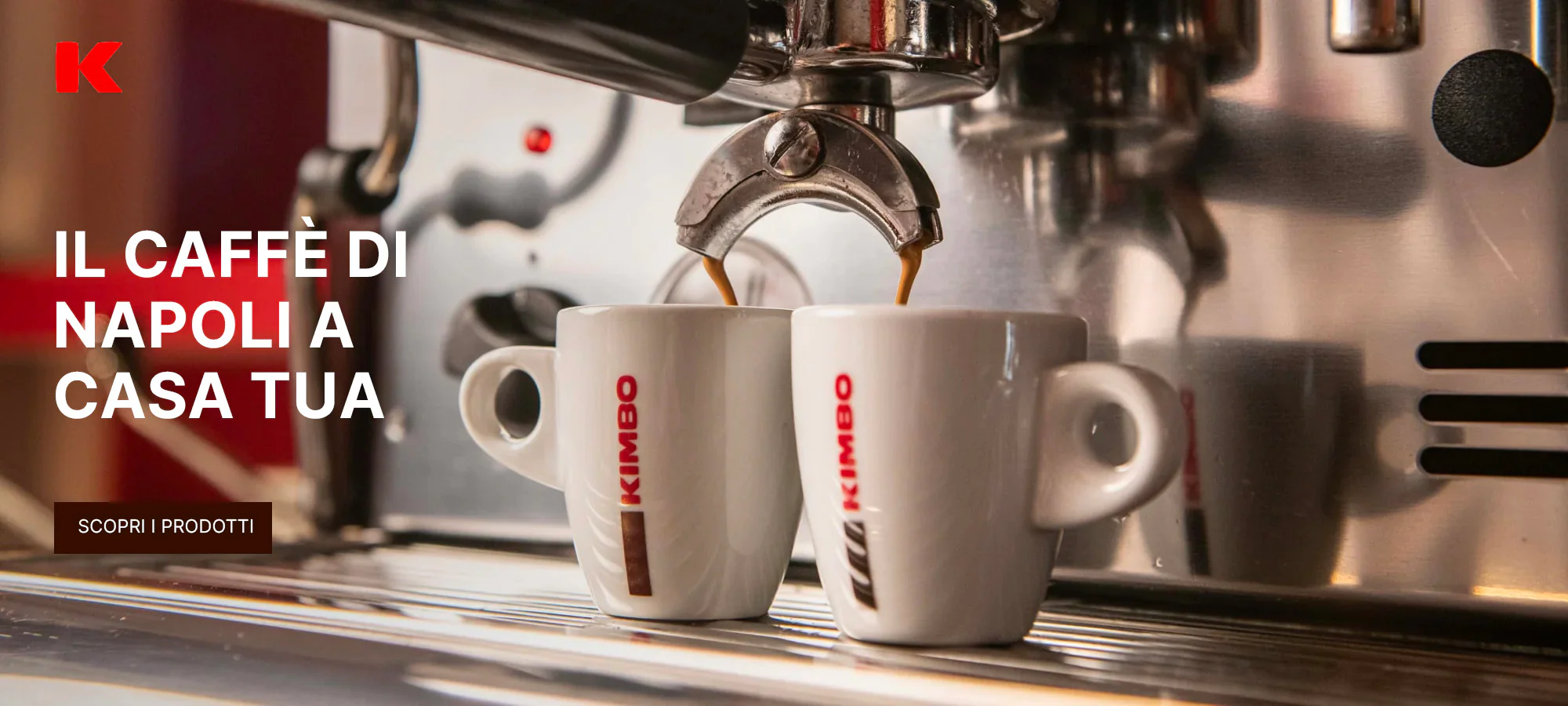
KIMBO's success is also based on careful communication. The brand has long emphasized its Neapolitan roots as a guarantee of authenticity. It plays on the sensory richness of the coffee experience: the sight of the foam, the intense aroma, the strong and enveloping taste.
Iconic advertising campaigns on television and in the press have contributed to making KIMBO a trusted brand, close to people, while valuing a warm and expressive Italian art of living.
KIMBO in the professional world
KIMBO is not only aimed at individuals: it is also a major supplier in the HoReCa sector (hotels, restaurants, cafes). Thanks to a tailored professional offer (machines, training, services), the brand is present in many establishments across Europe and beyond.
It offers specially designed blends for bars, with consistent quality and strong commercial support for its partners. KIMBO also trains professionals in the Art of Coffee, through training centers or online modules, thus consolidating its legitimacy in the world of baristas.
Ethical and sustainable commitments
Like many coffee players in the 2010-2020s, KIMBO became aware of the need to engage in a more sustainable approach. The brand has signed several partnerships with certified producers (Rainforest Alliance, UTZ, etc.) and promotes transparent supply chains.
It is also striving to reduce its carbon footprint by modernizing its production equipment, optimizing its packaging, and investing in more sustainable agricultural practices at the plantation level. These commitments are increasingly being highlighted in its communication with consumers.
Current positioning and public perception
Today, KIMBO positions itself as an accessible premium brand, highlighting its authenticity, its local roots and its ability to offer a quality coffee experience at home as well as in cafes.
In an increasingly competitive market, where artisanal players, large multinationals and private label brands coexist, KIMBO stands out thanks to its strong territorial roots, its reputation in Italy, and its complete product range.
The name KIMBO remains today strongly associated with the Neapolitan coffee culture, and with a certain idea of tradition and simple pleasure around an espresso.
In summary: a brand between tradition and modernity
The history of KIMBO is that of a successful transformation: from a family workshop in Naples to an internationally recognized coffee brand. It has managed to preserve the soul of its origins while adapting to the major developments in the global market.
Thanks to its commitment to tradition, its openness to innovation and its sense of service, KIMBO remains a benchmark for Italian coffee lovers. It now embodies the balance between a strong heritage and a dynamic turned towards the future.
You might also like: Coffee and Lights